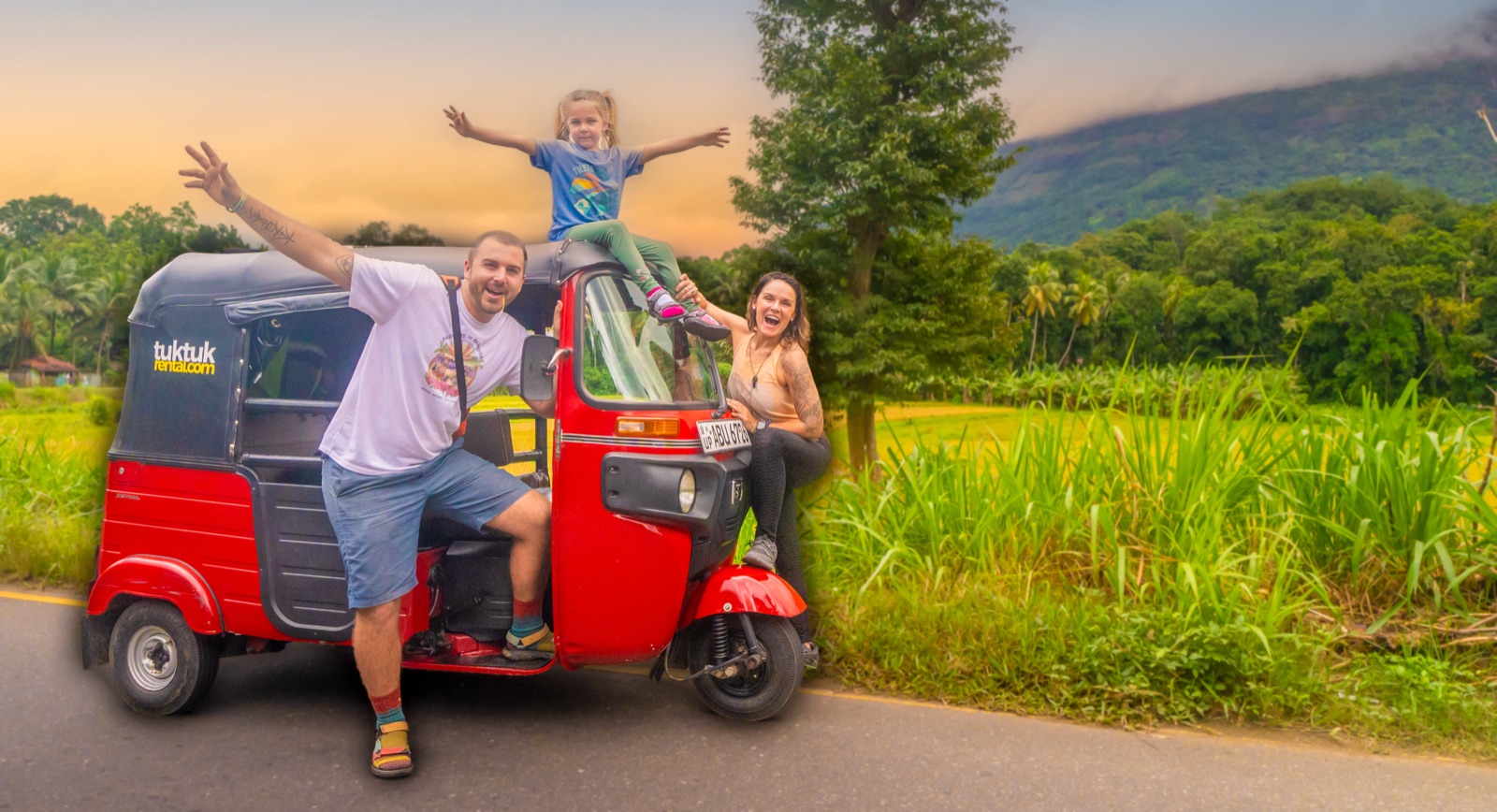
Sri
The complete insider guide to the island that surprised us most — three weeks in a rented tuk-tuk, guided by a Sri Lankan friend who showed us the country no guidebook mentions. Tea-country mountains, Lion Rock, elephants, and the warmest people we've ever met.
Start ExploringYour Complete Guide
Everything we learned, ate, surfed, and explored — organized so you can make the most of every day.
Before You Go
Sri Lanka wasn't even on our list — a friend we met working in Qatar talked us into it, and it became one of the most surprising, warm, adventurous trips we've ever taken. Here's everything we wish we'd known before we landed.
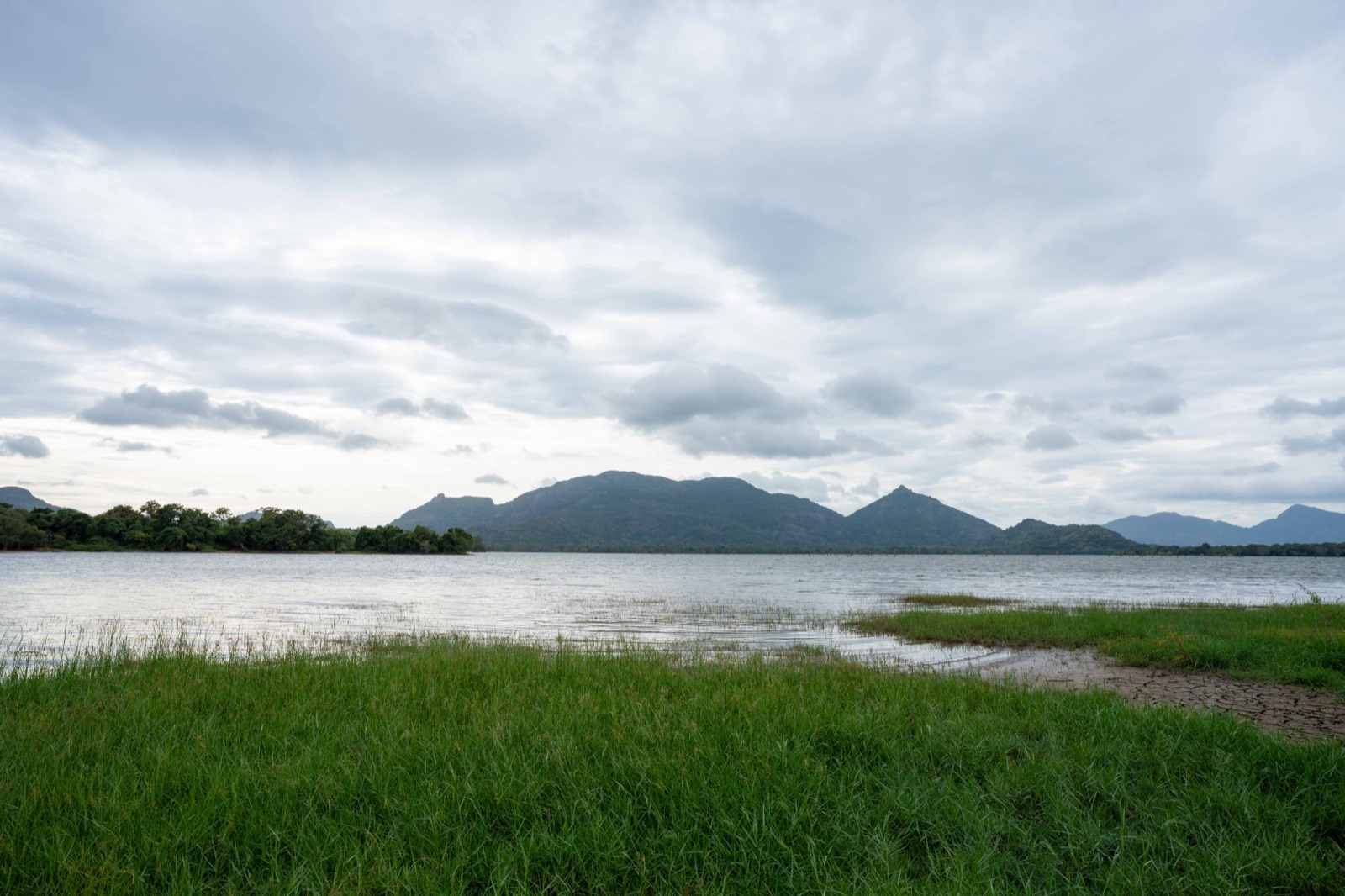
A quick honest framing before the logistics: we came to Sri Lanka overland after a rough couple of days in India, and the moment we landed it felt like home — the tropical, island-life feeling we'd loved in Costa Rica and Barbados, but with a culture and landscape all its own. We spent about three weeks driving the island in a rented tuk-tuk, and for the first stretch our friend Chaminda — who's from here — guided us. This guide is that trip, structured, plus the research to help you plan your own.
Weather & the Two-Monsoon Puzzle
Here's the single most confusing thing about planning Sri Lanka, so get it right: the island has two monsoons that hit opposite coasts at opposite times. You don't pick a "dry season" for the whole country — you pick the right region for your dates.
The southwest monsoon (Yala) soaks the south coast, west coast, and hill country from roughly May to September. The northeast monsoon (Maha) soaks the east and north from about October to January. So the tourist heartland — the south beaches, the tea country, the Cultural Triangle — is at its best December through April. The east coast (Arugam Bay, Trincomalee) flips that: it's best May to September.
We went in August and got a mix of sun and heavy bursts — and honestly, even the rain was beautiful and added to the adventure. (If you want one word: April and September are the island-wide shoulder sweet spots — as of mid-2026.)
chevron_rightWhere to Be, Month by MonthTap to expand
| Months | Best Region | What's Wet |
|---|---|---|
| Dec–Mar | South & west coasts, hill country, Cultural Triangle. Peak season, best weather. | East/north (NE monsoon tapering) |
| Apr | Island-wide sweet spot — brief window everywhere is decent. | Building heat before SW monsoon |
| May–Aug | East coast (Arugam Bay, Trincomalee) + Cultural Triangle. | South/west coasts + hills (SW monsoon) |
| Sep | Island-wide sweet spot again — shoulder value. | Transition |
| Oct–Nov | Shoulder; inter-monsoon rains can hit anywhere. | Most variable — check the forecast |
The Visa — Now Free (Don't Get Scammed)
Great news that's genuinely new: as of May 2026 the tourist ETA is free for around 40 nationalities including US, UK, Canada, Australia, and most of the EU (children under 12 are free regardless). It's a 30-day, double-entry permit.
You still must apply online before you fly — and this is where people get burned. Apply ONLY at the official government site, eta.gov.lk. There are convincing fake ETA sites (they outrank the real one in search and charge $50–80 for the now-free permit). If a site charges a US/UK/EU tourist a fee, it's not the official one. (Nationalities outside the free list pay ~$50 on the official site. As of mid-2026 — re-verify close to travel.)
Money
The currency is the Sri Lankan Rupee (LKR), running roughly 300–335 to the US dollar in mid-2026 (it's floating and has been volatile, so check the day you go). Sri Lanka is a cash-heavy country — you'll pay cash for most food, fuel, tuk-tuk stuff, and small guesthouses. Two tips that save real hassle: carry both a Visa and a Mastercard (many ATMs only take one network), and expect ATM fees around 300–1,000 LKR per withdrawal, so take out larger amounts less often. The 2022 economic crisis is over; things are stable for travelers.
Phone & Connectivity
Grab a local SIM — it's dirt cheap and far better value than an eSIM here. Dialog has the best coverage for tourists, and the airport kiosk sells big tourist data packs (around $4.50 for ~20GB, as of mid-2026) — a fraction of eSIM pricing. If you'd rather land connected, an eSIM (Saily or Airalo) works but costs more per GB. One real catch: the hill country has dead zones, so download offline maps of your route before you climb into the mountains.
We drove the whole island in a rented tuk-tuk — it's the heart of this whole guide and it's covered in depth in the next two chapters. For in-town rides use the PickMe app (Sri Lanka's Uber, including tuk-tuks). The famous hill-country train is a bucket-list ride but currently disrupted — see the Kandy & Hill Country chapter for the honest 2026 status.
Health & Safety, in Brief
Full detail is in the Health & Safety chapter (including the day our daughter got sick on the road), but three things to internalize before you come: there's an active dengue outbreak in 2026 — mosquito repellent and covering up at dawn/dusk is the #1 family health item; don't drink the tap water (bottled or filtered only); and get travel insurance with medical evacuation — the roads here are chaotic and it's cheap peace of mind.
Packing Essentials
Sri Lanka is hot-and-humid on the coasts and genuinely cold in the hill country, and it's a conservative, temple-filled country — so pack for both the beach and the temple.
- check_box_outline_blankTemple-appropriate layer — shoulders and knees covered to enter any temple (a sarong or light scarf works for anyone).
- check_box_outline_blankA warm layer + light rain jacket — Nuwara Eliya and the tea country are cold and misty; you'll want it.
- check_box_outline_blankSturdy shoes you can climb in — Sigiriya and the waterfalls are real, steep, earned climbs. Slip-on sandals won't cut it.
- check_box_outline_blankStrong mosquito repellent (DEET or picaridin) — dengue mosquitoes bite in the daytime. Non-negotiable this year.
- check_box_outline_blankReusable water bottle + a way to purify — tap isn't potable; refill from filtered sources to cut plastic.
- check_box_outline_blankBasic meds — rehydration salts, Imodium, any prescriptions (pharmacies are good but bring what you rely on).
- check_box_outline_blankA universal power adapter — Sri Lanka uses Type D/G/M plugs at 230V; your US/EU plugs won't fit without one.
- check_box_outline_blankSun protection — an open tuk-tuk means all-day sun and wind.
One Word of Sinhala
You'll get by on English in tourist areas, but a little Sinhala earns huge smiles. Learn one word before you land: "Ayubowan" (aa-yu-BO-wan) — a warm hello that literally wishes you long life. More phrases are in the Quick Reference chapter. Sri Lankans are, hands down, some of the warmest people we've ever met — a smile and a greeting go a very long way here.
Unlock the complete guide
You've read the first chapter. The full guide covers getting there, where to stay, getting around, every place we actually ate and stayed, safety, activities, day trips, day-by-day itineraries, a budget breakdown — plus an interactive map with every place in the guide pinned.
- lock_open Getting Your Tuk-Tuk
- lock_open Driving Sri Lanka by Tuk-Tuk
- lock_open The Cultural Triangle
- lock_open Kandy & the Hill Country
- lock_open Elephants & Ethical Wildlife
- lock_open The South Coast
- …and more
One-time purchase · yours to keep · instant access