Puerto
The complete insider guide to Mexico's Pacific soul — from a family that didn't just visit, but lived here for three months. Every zone, every taco, and the things we wish we'd known before we came.
Start ExploringYour Complete Guide
Everything we learned, ate, surfed, and explored — organized so you can make the most of every day.
Before You Go
We came to Puerto Vallarta thinking we needed two swimsuits and a pair of shorts. Three months later, here's everything we actually wish we'd known before the plane landed.
Weather & When to Go
Puerto Vallarta runs on two clear seasons. Dry season is November through May — sunny, low humidity, comfortable nights, and near-zero rain. That's when we'd tell most people to come, and it's when we were here. Rainy season is June through mid-October: hot, humid, and green, with rain that usually falls in short heavy bursts (often overnight or late afternoon), so your days can still be sunny.
The sweet spot is December through April — perfect weather, and it overlaps whale season. If you want value with still-good weather, aim for the shoulders: late April–May, or late October into November once the rains taper and hurricane season (which peaks Aug–Sep) has passed.
chevron_rightMonth-by-Month SnapshotTap to expand
| Month | High | Rain | Vibe |
|---|---|---|---|
| Jan–Feb | 81°F | Minimal | Peak season. Perfect weather, peak whales, coolest nights. |
| Mar | 81°F | Minimal | Dry and sunny. Spring-break crowds build. |
| Apr | 83°F | Driest | The driest month. Warm, low humidity. Easter week is chaos (below). |
| May | 86°F | Light | Hot but still dry. Shoulder value + Restaurant Week. |
| Jun–Jul | 89–90°F | Heavy | Rains begin, humidity climbs. Afternoon/overnight downpours. |
| Aug–Sep | 90°F | Heaviest | Hottest and wettest. Peak hurricane window. Lowest prices. |
| Oct | 89°F | Tapering | Rain easing, warm sea. Late-month is a value sweet spot. |
| Nov–Dec | 82–86°F | Light | Dry season returns, whales arrive. Nov is the value gem before holiday spikes. |
Sea temperature is swimmable all twelve months — coolest around 75°F in February–March, bath-warm at 86°F in August. Prices spike hard around Christmas/New Year, Semana Santa (Easter week), and US spring break — more on timing in the Budget chapter. (Weather and price data as of mid-2026.)
November is the quiet winner — the rain has stopped, the whales are arriving, the weather is dialed in, and prices haven't hit their December peak yet. If you can only pick one month and don't need Christmas, pick November.
Money & the ATM Playbook
Puerto Vallarta runs on a mix of cash and card. Hotels, bigger restaurants, and tours take cards fine — but street food, taco stands, taxis, markets, and tips are cash. Carry pesos. And here's the single most valuable money tip we can give you, learned the hard way:
Use a bank-branch ATM (Santander, Banorte, BBVA, Scotiabank) — ideally inside an enclosure, during business hours. When the machine offers to give you a set rate (like "16 pesos per dollar") and asks if you accept, always choose DECLINE / charge in pesos. That lets your home bank set the (much better) rate. Declining does NOT cancel the withdrawal. Random standalone ATMs stack a high conversion rate and a fat fee — Matt got dinged about 14% at one in Bucerías. Bank ATMs give the clean rate.
| What | Details |
|---|---|
| Exchange Rate | ~17.5 MXN per $1 USD (mid-2026, fluctuates). Quick math: peso price ÷ 18 ≈ dollars. |
| Best ATMs | Bank branches — Santander, Banorte, BBVA, Scotiabank. Decline the ATM's conversion offer. |
| ATM Fees | ~35–64 MXN per withdrawal at banks, plus your home bank's fee. Withdraw larger amounts less often. |
| US Dollars | Accepted in tourist zones but at a poor built-in rate. Pay in pesos to keep the difference. |
| Cash-Only Reality | Street tacos, markets, taxis, tips, small tiendas. Anything in a package or a nice restaurant takes cards. |
Local vendors will often tell you the price in Spanish, and if you don't catch it you'll just hand over a bill and hope they're honest. Learn 1–100 in Spanish before you come — it's the highest-return 20 minutes of prep you can do.
Phone & Connectivity
Your best bet is an eSIM on the Telcel network — Telcel has the widest coverage and faster uploads than the alternatives, especially once you leave the resort core. Install it before you leave home so you have data the moment you land. Saily is the one we recommend (runs on Telcel, easy setup, around $17 for 10GB or ~$25 for a week of unlimited, as of mid-2026); Airalo and others work on Telcel too.
WiFi around town is solid, not gigabit — we saw roughly 40 Mbps down / 8–10 up in cafés and apartments, fine for video calls and remote work. Matt ran his business from here the whole time. If you need a desk, PV has a real coworking scene (Vallarta Cowork, The Hive).
T-Mobile includes Mexico on essentially every plan — no setup, no roaming fee — and it's the easiest default for a casual visit. Verizon and AT&T only include it on premium/unlimited tiers; otherwise you're paying a daily pass. Check your specific plan before you fly, or just grab the eSIM.
The Time-Zone Gotcha
This one trips people up and can make you miss a tour: Puerto Vallarta (in Jalisco) and Nuevo Vallarta / Nuevo Nayarit (across the Ameca River in Nayarit state) look like they should be in different time zones — but the whole Bay of Banderas runs on the same clock (Bahía de Banderas adopted Central Time back in 2010). Your phone shouldn't change as you cross between them, though it occasionally mis-detects near the border, so verify the time manually if you have an early boat or flight.
One more wrinkle: Mexico dropped Daylight Saving Time in 2022, but the US still uses it — so PV's offset from your home city shifts by an hour depending on the season. Don't assume a fixed difference; check against your specific city and date.
Entry, Taxes & Paperwork
US and Canadian tourists need a passport valid 6+ months (a passport card won't work for flying in) and no visa for a normal visit. Your tourist entry permit (FMM) for stays up to 180 days is bundled into your airline ticket as the "Mexican tourism tax" for air arrivals — you don't file separately, and Mexico is moving it fully digital. The officer sets your allowed days, so glance at what you're granted.
VISITAX does NOT apply to Puerto Vallarta — that's a Quintana Roo (Cancún/Tulum) tax. If anyone tries to charge you "VISITAX" for a Jalisco trip, it's not a thing. Separately, Jalisco introduced a small ~160-peso (~$8) visitor fee in 2026, often collected through your lodging — ask at check-in whether it's already on your bill so you don't pay twice. (Both as of mid-2026 — tax rules here change; re-verify close to travel.)
Packing Essentials
PV isn't a generic beach trip — the cobblestones and the seasons drive what you bring.
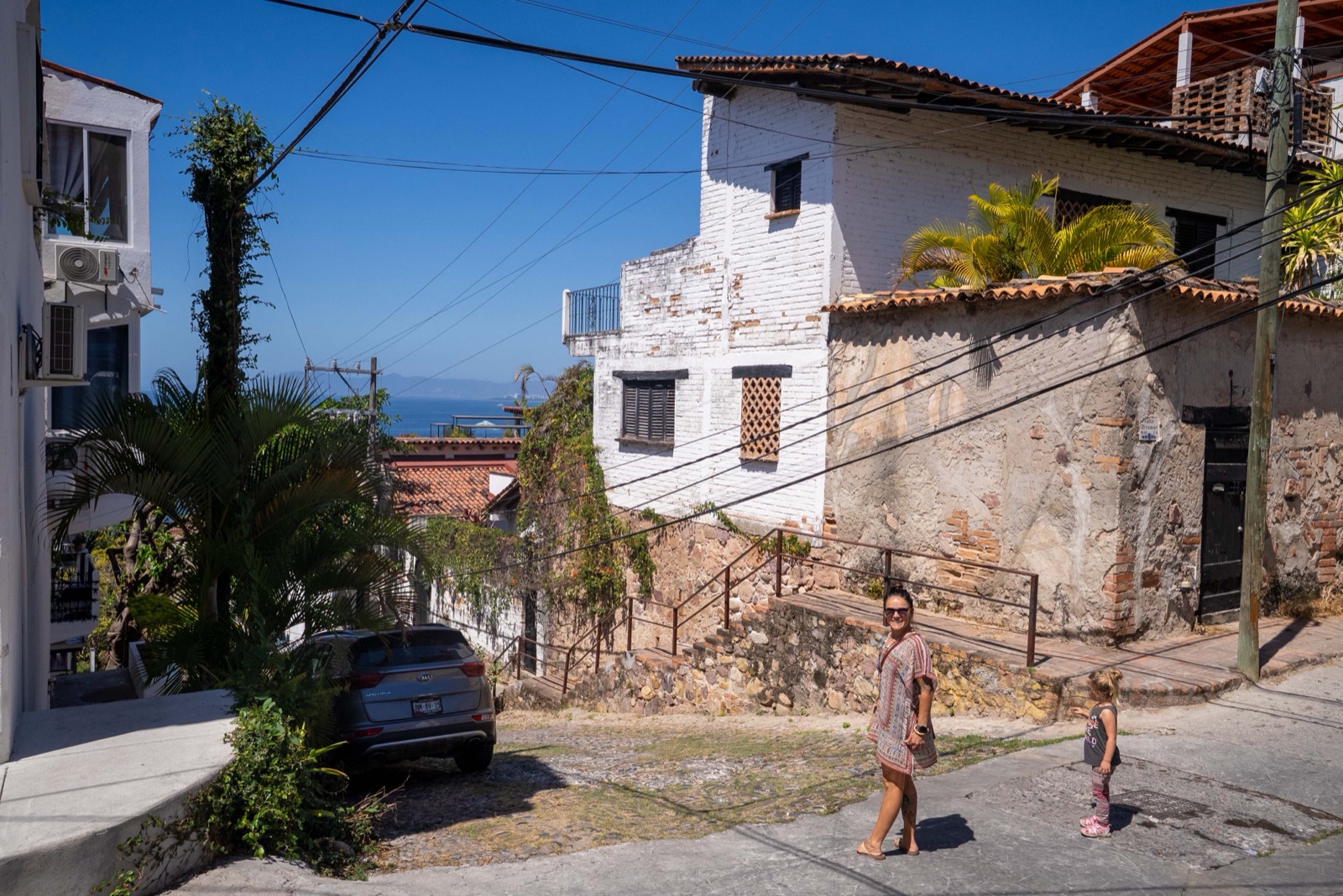
- check_box_outline_blankSturdy, non-slip walking shoes — Centro and the Romantic Zone are steep cobblestone and uneven sidewalks. Flat flip-flops struggle here, and we watched a lot of people trip.
- check_box_outline_blankReef-safe mineral sunscreen — zinc/titanium, no oxybenzone or octinoxate. Required at some marine areas (Los Arcos, Marietas). Bring your preferred brand.
- check_box_outline_blankReusable water bottle — tap water isn't for drinking (below). Rentals usually have a garrafón (big jug) to refill from.
- check_box_outline_blankLight rain jacket + bug spray — only if visiting June–October. Rain is heavy but short; mosquitoes pick up in the evenings.
- check_box_outline_blankTwo swimsuits — so one dries while you wear the other.
- check_box_outline_blankImodium + electrolytes — Liquid IV or Pedialyte. "Traveler's tummy" is usually food, not water. Just in case.
- check_box_outline_blankNo adapter needed — Mexico uses the same 127V Type A/B plugs as the US and Canada.
Use sealed bottled or filtered water (Bonafont, Ciel, Epura — sold at every OXXO and corner store) for drinking and brushing teeth. PV's municipal water is treated, but aging building pipes can re-contaminate at the tap, so locals and long-timers drink bottled too. Ice and water at established tourist-zone restaurants are purified and safe.
Essential Spanish
English is widely spoken in the tourist zones, but a little Spanish opens doors — and in the local neighborhoods (where the best food is) it's genuinely useful. A warm "buenos días" with a smile goes a long way.
chevron_rightPhrases That Actually Helped UsTap to expand
| ¿Cuánto cuesta? | How much is it? (KWAN-toh KWES-tah) |
| ¿Me trae la cuenta, por favor? | The check, please — they won't bring it until you ask |
| Quisiera... / Me gustaría... | I'd like... (politer than the blunt "Quiero") |
| ¿Aceptan tarjeta? | Do you take card? (many small spots are cash-only) |
| Sin hielo, por favor | Without ice, please |
| ¿El agua es purificada? | Is the water purified? |
| ¿Dónde está el baño? | Where's the bathroom? |
| ¡Buen provecho! | Enjoy your meal — said to anyone eating, even strangers. Very local. |
Unlock the complete guide
You've read the first chapter. The full guide covers getting there, where to stay, getting around, every place we actually ate and stayed, safety, activities, day trips, day-by-day itineraries, a budget breakdown — plus an interactive map with every place in the guide pinned.
- lock_open Getting There & Around
- lock_open The Zones
- lock_open Where to Stay
- lock_open The Malecón
- lock_open Is It Safe?
- lock_open Food & Drink
- …and more
One-time purchase · yours to keep · instant access